
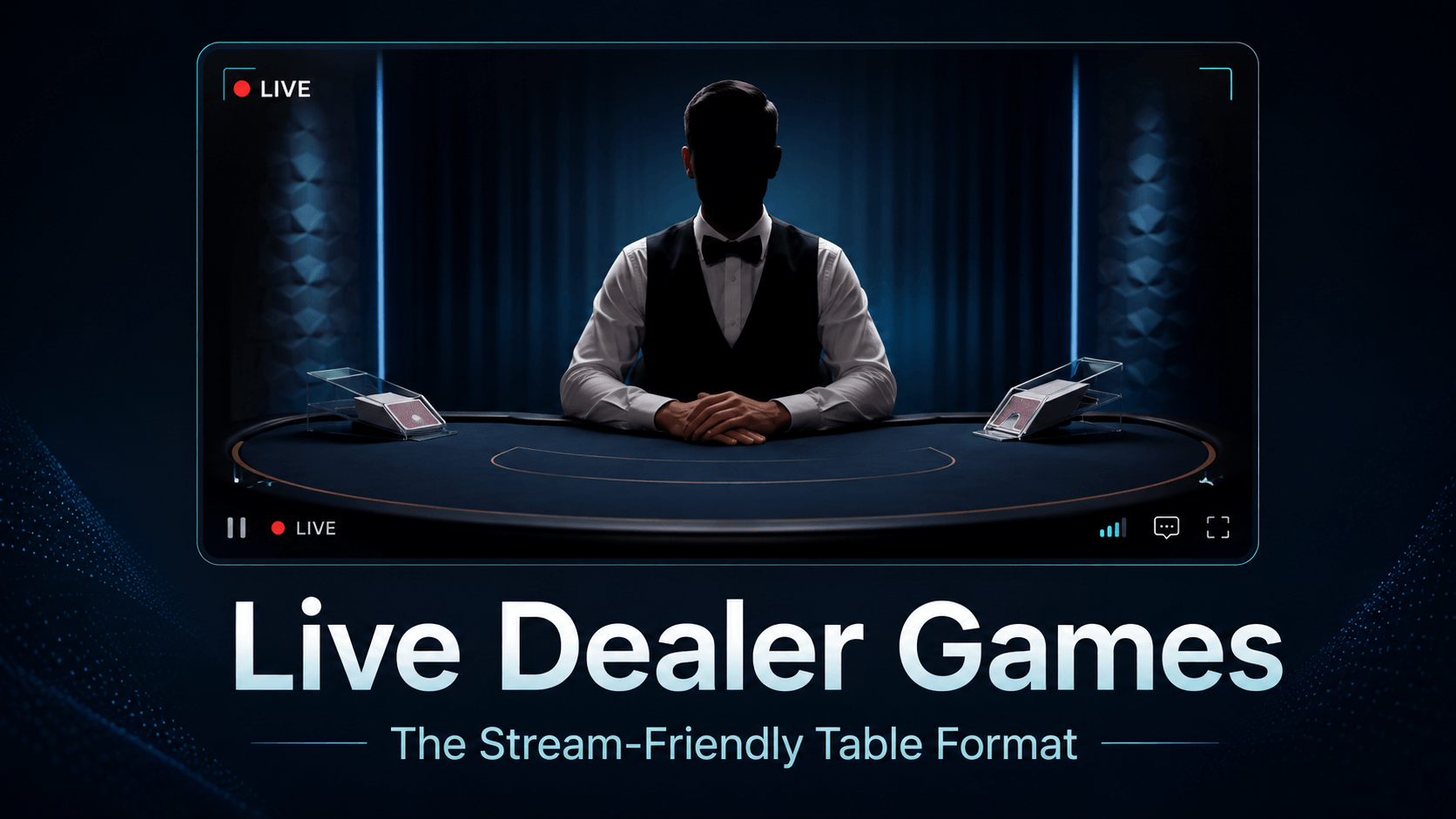
Live table games are easier to understand when you treat them as streamed experiences first. The camera, host, timing, and visible table change how the format feels. Instead of reading rules in isolation, viewers see actions unfold in sequence, making each round feel closer to live entertainment.
That shift matches how many gaming audiences already learn. Viewers follow creators, react to visual cues, and build context from repeated scenes. A study on video game streaming motivations notes that livestream viewers are shaped by entertainment, social, and information-seeking motives, which helps explain why real-time presentation matters.
From Stream Cues to Table Flow
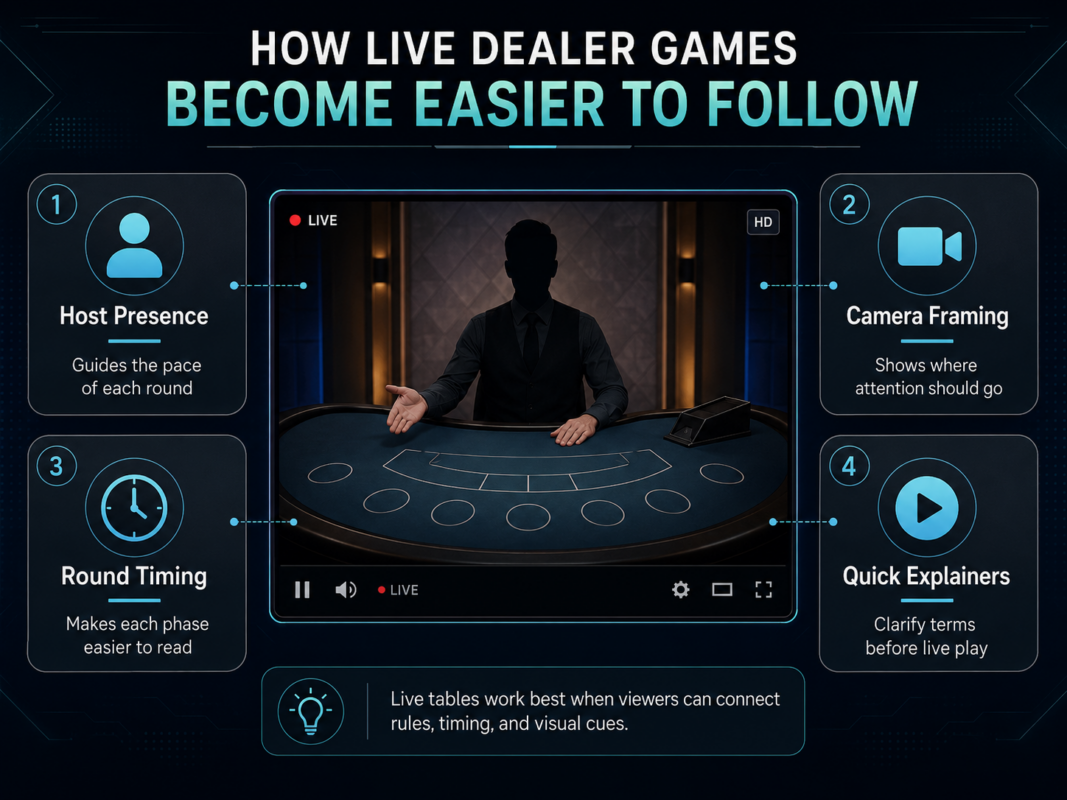
A useful way to read live-hosted table games is to notice what the stream clarifies before the rules become detailed. The host gives the round a human pace. The camera frames the table, so the viewer knows where to look. The card reveal, wheel spin, or result moment becomes part of a visible sequence, rather than a hidden calculation.
For readers who want to see that format in context, it can help to play real live dealer table games online. This lets you enter a live dealer environment with table formats such as blackjack, roulette, and baccarat, presented through real-time video with human dealers. Playing live dealer games online lets you see how the format works: dealer prompts mark transitions, table timing creates rhythm, and each round shows how familiar table games work when presented as a live stream.
Baccarat is a strong example because its round structure is simple enough to learn quickly. A short Learn Baccarat in under 60 seconds video can help new viewers connect the terms Player, Banker, and Tie with the pace of a live round. The value is not in memorizing every edge case first. It is in building enough familiarity to follow what is happening on screen.
What the Viewer Is Really Reading
Live dealer games are often described by their technology. You’ll frequently hear about how high the resolution is and how sharp the image looks, but in practice, the viewer pays attention to much more than stream quality. They focus on the pace, confidence, sequence, and the signals that tell them when attention should shift. In a fully automated game, the system can move quickly because everything is being handled by code. In a live-hosted version, the table has a tempo based on how quickly the dealer moves. That tempo makes space for recognition.
This is why live-hosted table games are often great for getting familiar with a new game. The presence of a human dealer doesn’t just make the game feel more personal. It also changes how information is staged. A blackjack round has decision points. A roulette round has a build toward the result. Baccarat has a compact rhythm where the viewer mainly needs to understand the sides and card total logic. Each one becomes clearer when the presentation gives the viewer repeated visual patterns.
Why Short Explanations Work So Well Here
The best beginner explanation does not try to teach everything at once. It gives the viewer a starting point, then lets the live format reinforce it. For baccarat, that starting point is usually pretty simple: there are two sides you can bet on plus a tie option, and there is a scoring system for the cards based around the number 9. For blackjack, it’s a little more complex and focuses on hand totals and the choices you have at each stage. Even roulette has an early starting lesson where players get used to the different bets they can place.
That learning style feels natural for gaming readers because stream-friendly games are often understood through repetition before full mastery. A player or viewer might not know every mechanic, map, role, or timing cue at first. They usually learn by seeing a clear example, hearing the right term, and then recognizing the pattern the next time it appears.
That is why a 2026 guide to free games to stream on Twitch is a useful companion point here: it frames streaming choices around audience appeal, dynamic gameplay, regular updates, and content longevity, which all depend on viewers being able to follow what is happening on screen.
Live dealer games work in a similar way. They give the learner movement. The host’s actions, the camera angle, and the round’s pacing all become part of the explanation. When that is handled clearly, the table stops feeling like a list of terms and starts feeling like a stream with a readable structure.
A New Viewing Language for Table Games
Live-hosted table games show how older formats can be reshaped by streaming habits. The table is familiar, but the viewing language is modern: camera-led, host-guided, paced in real time, and easy to support with short educational clips. For gaming audiences, that makes the format worth understanding as part of broader livestream culture.
Live presentation can make rules feel more concrete because the viewer sees timing, sequence, and outcome. That is why short videos, clear first definitions, and repeated visual cues matter. Research on video-based training and cognitive load states that “Successful learning occurs when working memory capacity is not overburdened by overall cognitive load,” so it seems likely that live-streamed games that take a slower approach to the game may help viewers understand it better.