
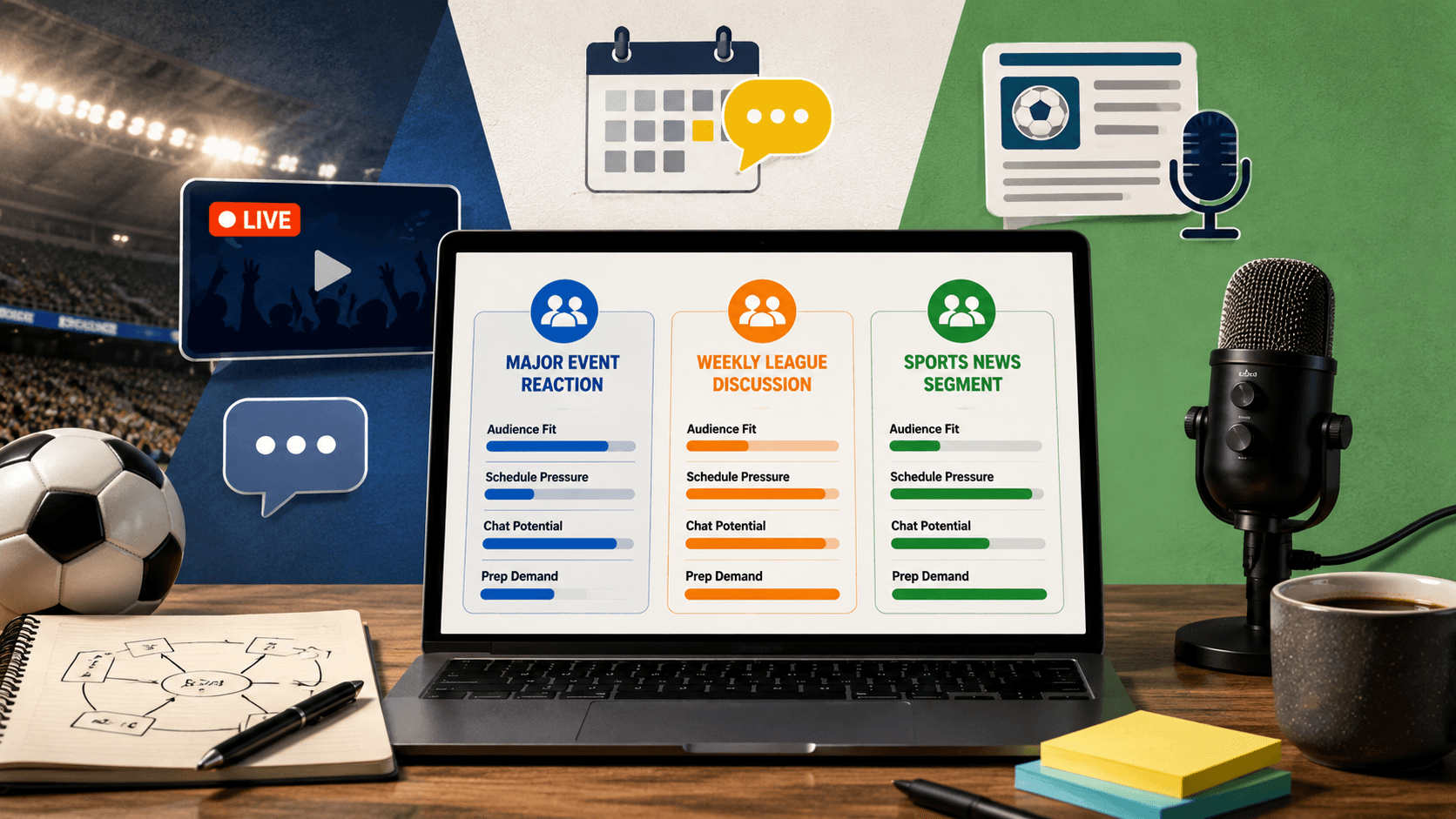

A gaming channel can add sports content without becoming a full-time sports channel, but the format has to match the audience already in the room. A major-event reaction asks little of the weekly schedule, while a league discussion creates a recurring appointment. A sports-news segment requires regular research, even when no game is live. Therefore, the useful first question for a gaming channel is not “Will sports work?” but “Which version of sports content can this channel offer without weakening its usual streams?”
That decision should begin with viewer motivation rather than assumed overlap between gaming and competition. A Scientific Reports study of esports livestream viewers found that leisure entertainment and competitive stimulation were among the motivations associated with watching live broadcasts. This suggests that creators should identify the experience their audience already values, then choose a sports format that provides a comparable reason to stay, such as tension, informed commentary, or shared reactions.
Budget the Format Before the Calendar
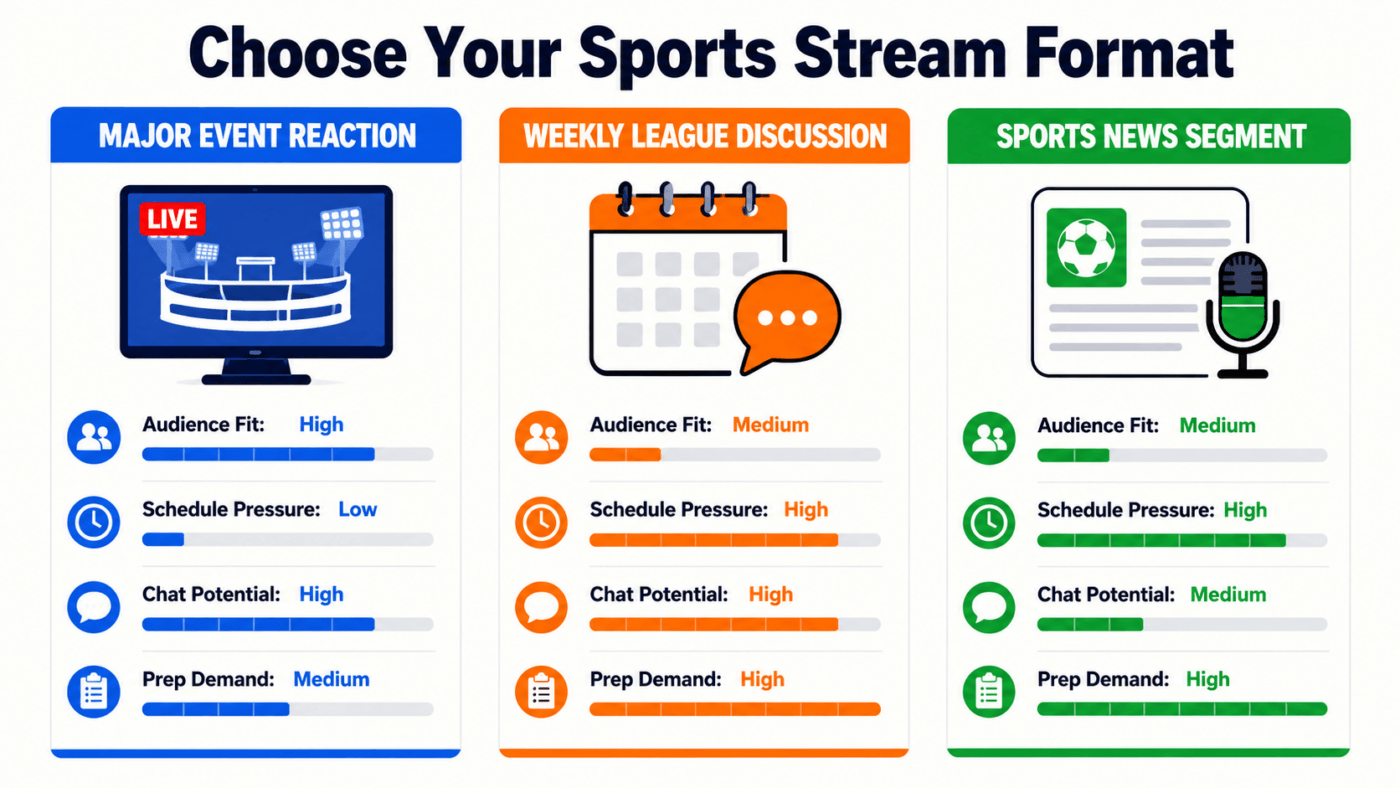
Different formats can look similar in a channel announcement while demanding very different commitments. Before reserving a weekly slot, separate the cost of accessing events from the time needed to follow a league, prepare useful talking points, and keep the segment understandable for viewers who missed the previous installment.
Cost planning changes if the proposed segment includes odds-based discussion or other sportsbook material. That is a distinct format choice, not an automatic extension of a general match reaction. Lucky Rebel is a broad sportsbook-and-casino destination, making it a concrete example of a platform that handles both gaming and sport content. Any gaming website looking to include sports should consider exploring how they approach this.
Properly researching the content is important too. A weekly odds recap requires different research from a post-game reaction or a league news roundup. The same separation applies when using research published by Lucky Rebel, since its streaming-cost analysis measures selected subscription prices rather than audience fit, production time, or likely chat response. Keeping those inputs separate prevents a simple content experiment from turning into an open-ended commitment.
Compare the Three Commitments
The most useful scorecard is qualitative. Rate each option against the habits of the current channel rather than chasing a universal winner.
| Format | Audience overlap | Calendar pressure | Chat potential | Access and preparation |
|---|---|---|---|---|
| Major-event reaction | Highest when the event already interests the community | Low, because it is occasional | Strong during obvious turning points | Event access plus focused research |
| Weekly league discussion | Depends on sustained interest in one competition | Medium to high across the season | Best when viewers recognize ongoing stories | Regular viewing, notes, and continuity |
| Recurring sports-news segment | Can work for variety-led communities | High, because news keeps moving | Steadier discussion rather than one peak | Broad monitoring and frequent verification |
A major event reaction is often a good place to start for a gaming site that’s beginning to branch out into sport content because it has a clear beginning and end. It can reveal whether viewers enjoy the creator’s sports commentary without changing the channel’s identity. A weekly league slot asks more of returning viewers: unfamiliar names, standings, and previous results can make each episode harder to enter. A news segment offers flexibility, but it creates the greatest research load because the creator must decide what deserves attention before going live.
Build Chat Around Moments, Not Constant Questions
Sports chat rarely moves at the same pace for an entire broadcast. A PLOS One study of more than 25 million baseball chat messages found that pre-game and in-game factors were related to viewer interaction, with effects differing across more active, less active, loyal, and non-loyal users. The study concerned one service and should not be generalized to every stream, but its practical lesson is useful: creators can prepare for moments when viewers naturally have something to discuss.
That means saving direct prompts for lineup changes, controversial decisions, momentum shifts, or the end of a period, rather than filling every quiet passage with questions. During slower stretches, the creator can explain context, answer questions in the chat, or connect the event to familiar gaming ideas, such as team composition and resource timing. The sport supplies the rhythm. The creator’s job is to make that rhythm legible without talking over every second.
Test One Format Before Rebuilding the Schedule
Run the first sports stream as a limited programming test with one event and measure your audience’s response. Look beyond peak viewers. Note how many regulars stayed, whether chat needed extensive explanation, how much preparation was required, and whether the format produced useful clips or follow-up discussion.
A successful test does not prove that a weekly series will work. It shows which part of the experiment held attention. Keep that part, reduce the unnecessary workload, and decide whether the next step is another event reaction, a short league segment, or no schedule change at all.