
Most people pick a Twitch name the same way they pick a Wi-Fi password: fast, half thought out, done at 1am the night before their first stream. Then two years and 4,000 followers later they’re stuck with it, because changing it means losing your channel URL, confusing your regulars, and starting your search rankings over from zero.
It’s worth thinking about for five minutes before you lock it in. Here’s what actually matters.
The TTV question
“TTV” (short for “on Twitch TV”) is a tag that spread through competitive lobbies, mostly Fortnite and Warzone, as a way to flag yourself to other players in-game. The idea is that people play differently around you, or clip you more, if they know you’re streaming. That’s the whole use case. It’s a signal for one specific moment in one specific game, not really a name.
Outside that context it’s mostly working against you:
- It reads as a label, not an identity. “TTV_Shadow99” tells someone what you are before it tells them who you are, and it looks identical to ten thousand other tags with the same prefix.
- It’s tied to a very specific corner of shooter culture. Outside that world, it reads as a bit dated.
- It doesn’t carry over anywhere else. Nobody’s typing “TTV” into a YouTube search, and it just looks unfinished on a Discord invite or merch tag.
If your whole plan is getting noticed in ranked lobbies, fine, it does that job. If you actually want a name people remember you by, leave it off.
Unique vs. easy to say, and why those aren’t actually opposites
The instinct is “make it unique so nobody confuses me with anyone else.” Fair. But people usually get there by tacking on random numbers, extra underscores, or a deliberately weird spelling, and that trades one problem for another: now nobody can spell it back to you.
Really there’s just one question that matters: if someone heard your name once, could they spell it and find you on the first try? A few ways to sanity check that:
- Someone mentions you out loud with no visual, like on a podcast or in a voice call. Does the person listening spell it right?
- A viewer tells a mate about you in conversation, not a screenshot. Does it sound like a real name, or a wall of numbers?
- Someone searches for you on Twitch. Do they land on you, or on twelve near-identical names because yours was one character off from what they guessed?
- Is the exact same name actually free on YouTube, X, Instagram, and TikTok, not just close?
Getting uniqueness through spelling tricks tends to backfire, because now there’s a “correct” wrong spelling everyone has to remember. Getting uniqueness through an actual distinctive word or made-up term doesn’t have that problem.
Going through all of that manually for every name idea gets old fast, especially once you’re comparing five or six at once. A Twitch name generator is a quicker way to get a shortlist that’s already leaning toward the easy-to-say, easy-to-find side of things, worth a look before you burn an hour staring at a blank page.
Factors outside your control
Twitch usernames have to be 4 to 25 characters, and the only characters allowed are letters, numbers, and underscores. No periods, no spaces, no symbols. It’s stored lowercase and treated as the same account either way (“GamerZ” and “gamerz” can’t both exist), but your display name capitalization can be changed anytime, no restrictions, so “shadowfox” can still show up as “ShadowFox” whenever you want.
The actual login name is stricter. Twitch currently lets you rename once every 60 days, and your channel URL changes with it, so every social bio, panel link, and old clip pointing to your old URL breaks. Your old name isn’t handed out again right away either; it sits on hold for a while first. None of this is a big deal day to day, but it’s a good reason to get the name close to right the first time instead of treating it as a placeholder.
One nice side effect of the character rules: since Twitch only allows letters, numbers, and underscores, anything that works on Twitch will automatically work everywhere else too. Build around Twitch’s rules first and the rest gets easier, not harder.
A few patterns that tend to work
“Just be creative” isn’t advice you can actually use. In practice, most good names fall into a handful of repeatable buckets:
- Your actual first name, lightly styled or paired with one other word. NICKMERCS is Nick plus “Mercs.” TimTheTatman is Tim plus a nickname. This works because people already know how to say and spell real names, and it doesn’t tie you to a game or a trend that’ll feel dated later.
- A real word that already exists, used as-is. shroud is just a word. Ludwig is a real name repurposed as a handle. Nobody has to guess the spelling because it’s already in their vocabulary, and the word’s own vibe (shroud: dark, sharp, a bit mysterious) does some of the branding for you before you’ve even streamed.
- A made-up word that isn’t a real word but is easy to say. xQc, Tfue, Myth. Riskier since there’s no built-in meaning to lean on, but if it’s short and gets said enough by enough people, the repetition itself does the job a real word would’ve done for free.
- Two words or word-fragments smashed together into one. Pokimane, CohhCarnage. Can carry more personality than a single word, but runs the risk of getting long or clunky if the two halves don’t blend cleanly.
Knowing which bucket your name falls into helps you judge it fairly. If you’ve made up a word, hold it to a stricter bar on how short and easy to say it is, since it doesn’t get the free pass a real word gets.
The name is just the start
Picking the name is step one. What actually turns it into something people remember is everything you build around it after:
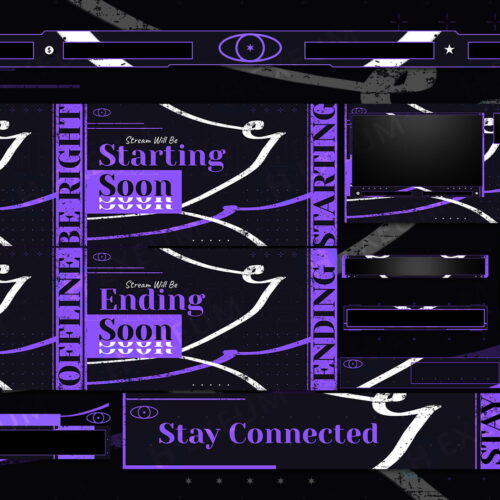
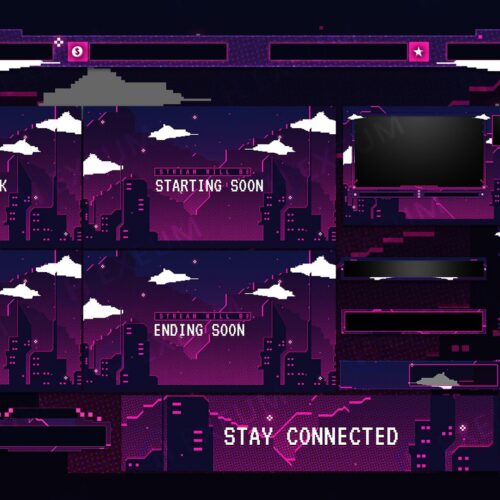
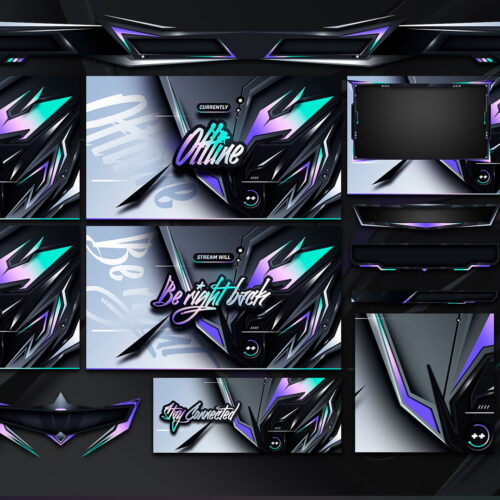
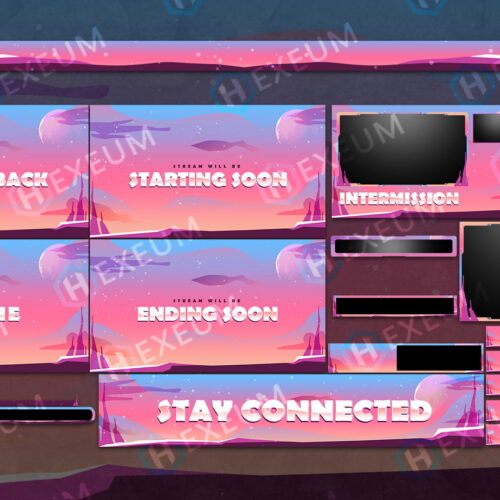
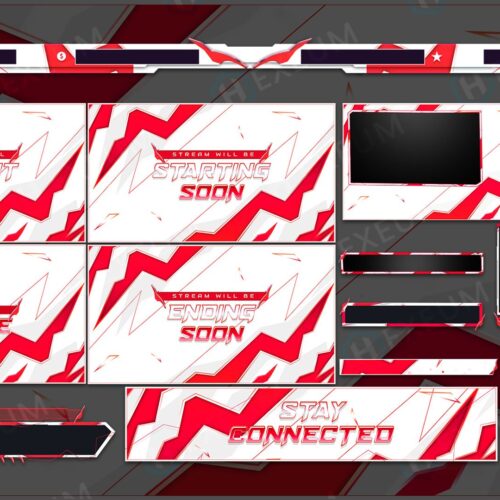
- A look that matches the vibe of the name. shroud reads dark and minimal, so the whole channel, logo, panels, emotes, leans into that same dark and minimal feel instead of fighting it. If your name sounds playful, your overlays probably shouldn’t look like a spreadsheet. This is the bit people underinvest in compared to the name itself, and a great name paired with a mismatched, generic overlay pack undercuts itself the second someone actually clicks into the stream. [PLACEHOLDER: overlay link]
- Something a crowd can actually chant. At in-person events, short names get chanted, long ones don’t. Worth weighing if there’s any chance people will ever say your name out loud together.
- Not welding it to one game or one year. A name like “xXHalo_Sniper2009Xx” locks you into one title and basically timestamps the account. If there’s any chance you’ll play something else down the line, keep the name itself flexible and let your content say what you’re about instead.
Names that shouldn’t really work, but do
The checks above are a decent filter, but they’re not the whole story. Some of the biggest names around would fail half of it and still stuck.
xQc is three letters that don’t spell anything and aren’t obvious to pronounce on sight. It fails the “spell it after hearing it once” test pretty badly. What it has going for it instead: it’s short, it stands out visually in a chat full of other names, it’s quick to type, and once the audience got big enough, saying it constantly just turned it into its own word. The takeaway isn’t “don’t worry about how it reads.” It’s that being extremely short plus getting said a lot can make up for having no built-in meaning. That only really works at scale though, it’s a bet, not a formula.
Tfue is the same story. Not a real word, no obvious spelling, doesn’t describe anything. It’s short enough to say in one breath once you’ve heard it, and it got said nonstop during peak competitive Fortnite. The sheer amount of repetition, from a genuinely massive audience, did the work that an easier name would’ve done automatically for a smaller channel.
NICKMERCS breaks the “keep it simple” idea a different way. Two words jammed together with no space, all caps, genuinely a bit harder to parse at a glance than most advice would tell you to aim for. But it’s built on a real name (easy to read and spell) fused with one aggressive word, and the loud all-caps look matches an equally loud, high-energy on-screen personality. The name matches the energy of the content, and that ends up mattering more than any individual spelling rule.
What all three have in common: they leaned hard into one thing, either being extremely short, or matching the persona perfectly, instead of trying to tick every box a little bit. A name that’s slightly odd but has one clear, distinct thing going for it usually beats one that’s fine everywhere and stands out nowhere.
Before you lock it in
- Say it out loud in a sentence: “just caught [name]’s stream.” Notice if it feels clunky.
- Get someone else to spell it back after hearing it once, cold, with no context.
- Check the exact name, not a close variant, on Twitch, YouTube, X, Instagram, and TikTok.
- Make sure it’s 4 to 25 characters, letters, numbers, and underscores only, since that part’s non-negotiable.
- Be honest about which bucket it falls into (real name, real word, made-up word, mashup) and judge it against that bucket’s own bar.
- Make sure it doesn’t tie you to one game, one year, or one trend you might outgrow.
If you’d rather skip straight to a shortlist that’s already checked against most of this, that’s what the Hexeum Twitch name generator is for. Give it a few words about your content and personality and it’ll hand you options worth running through the list above.