
On July 31, 2026, Razer announced it had acquired the assets of StreamElements from Live Momentum Ltd. for an undisclosed sum. For most people outside the streaming world, that’s a forgettable line in a business section. For the millions of creators whose overlays, alerts, chatbots and tipping pages run on StreamElements, it’s the end of nearly three months of genuine uncertainty about whether any of that would still exist by the autumn.
The short version is that StreamElements survives. The longer version, covering why it needed saving at all, why Razer was the one to do it, and what that means for the platform’s next few years, is more interesting and a lot less settled.
The Crisis: Internal Messages and Shutdown Fears
The story broke the way these stories usually do: from the inside, and not on purpose.
In mid-May 2026, internal messages from StreamElements employees leaked, and they were bleak. Staff had apparently been told the company was preparing to close its doors, with the platform staying accessible for roughly 30 days so creators could get their affairs in order. Reports of layoffs followed almost immediately. Within a day, “StreamElements shutting down” was trending across Reddit, X and streaming Discords. GamesBeat’s reporting from May 15 captured how quickly the situation moved.
The company’s public response arrived on May 14 and was carefully worded. StreamElements said it was in positive discussions with potential acquirers and working to find the best path forward for creators, customers and its team. That falls some way short of a denial. As Shacknews noted at the time, confirming acquisition talks was effectively confirming the business was in jeopardy.
A week later, on May 21, CEO Or Perry went further and said plainly that the platform was not shutting down. Funding had been secured to keep operations running while the company worked with what it described as an “amazing partner.”
In between, the speculation got loud. Rumble CEO Chris Pavlovski reached out publicly on X. Kick CEO Eddie confirmed he was in active talks. For a while it looked like StreamElements might end up owned by one of the streaming platforms it was supposed to serve neutrally, an outcome that would have raised its own set of uncomfortable questions.
The Problem: Free Tools and a Broken Revenue Model
Here’s the part that deserves more attention than it usually gets, because it explains everything that followed.
StreamElements launched in 2016 with a straightforward promise: the tools stay free. Overlays, alerts, the chatbot, the activity feed, tipping pages, all of it available to anyone, whether you had ten viewers or ten thousand. That principle is a large part of why the platform reached over 23 million creators across the decade and became, effectively, invisible infrastructure for a huge chunk of the streaming ecosystem.
But free tools need to be paid for by something, and StreamElements chose the brand partnership marketplace: match creators with sponsors, take a cut, subsidise everything else. On paper it’s elegant. In practice, it tied the company’s entire revenue base to the health of one specific ad market, and that market moved.
As brand spend diversified away from Twitch and toward YouTube Shorts, TikTok and connected TV, the marketplace stopped scaling the way it needed to. Tubefilter’s May coverage traced the pattern of belt-tightening that followed. The company had raised over $111 million, including a $100 million round in 2021 led by SoftBank, and never announced profitability. Headcount peaked above 200 in early 2022 and had fallen to around 72 by mid-May 2026, a reduction of more than 60% across repeated rounds of cuts.
The clearest signal came in January 2026, months before anything leaked. Perry launched a crowdfunding campaign called “Keep It Live,” asking creators to voluntarily contribute to keeping the platform running. A company that had raised nine figures from one of the world’s best-known venture funds was passing the hat to its own users. In hindsight, that was the alarm bell.
So by May, StreamElements had a stark choice. Break the promise that made it what it was, or find someone willing to fund it. It chose the second.
A Familiar Pattern: Learning From Streamlabs and Logitech
If this feels like something you’ve seen before, that’s because you have.
In September 2019, Logitech acquired Streamlabs, StreamElements’ closest competitor, for approximately $89 million in cash plus another $29 million in stock tied to growth targets. Streamlabs was, at the time, claiming that around 70% of Twitch streamers used its software. Logitech’s stated reasoning was that the software was complementary to its existing gaming portfolio.
Which is the polite way of describing vertical integration. Logitech already sold the keyboards, mice, microphones and webcams streamers used, and it had picked up Blue Microphones the year before. Buying Streamlabs meant owning the software layer sitting on top of the hardware, and with it, a direct line to millions of creators at the exact moment they’re setting up a stream and deciding what to buy. Corsair ran the same play with Elgato.
Razer is now running it again, and the strategic logic is close to identical. Razer sells the gear. It runs a Content Creator Program that it refreshed in 2024, onboarding tens of thousands of creators with perks, Discord access to Razer staff and bounty programs. What it didn’t have was the software creators open every single time they go live. StreamElements is that: a mature platform with an enormous, overwhelmingly gaming-focused user base, available at a moment of maximum leverage because the alternative was liquidation.
There’s an obvious upside in that for creators, and an obvious question. The upside is that a hardware company with a working business model can afford to keep the tools free in a way a standalone SaaS company evidently could not. The question is what a hardware company eventually wants in return.
Razer Acquires StreamElements: What We Know
Razer’s framing, set out in its official announcement, is that this is a natural extension of what it already does. Min-Liang Tan, Razer’s co-founder and CEO, said that creators and live streamers have been part of the Razer community for a very long time, and that bringing StreamElements in lets the company double down across gear, software and growth programs.
Perry, for his part, leaned into the personal angle. Razer sponsored his first esports team, which makes the ending feel like a full circle to him, and he’s said he believes the platform couldn’t be in better hands.
The concrete terms, as disclosed:
- Razer acquired StreamElements’ intellectual property, platform data and business records from Live Momentum Ltd. The price was not disclosed.
- StreamElements continues to operate as a standalone platform under a Razer subsidiary. It is explicitly not being absorbed into Razer’s own software stack.
- The existing team stays, working the roadmap the community already knows.
- All core tools continue: overlays, alerts, chatbot, tipping pages, SE.Merch, SE.Live and sponsorships.
- Integrations continue unchanged with OBS, Streamlabs OBS and XSplit, and across Twitch, YouTube, Kick and X.
- Logins, settings, overlays and history stay exactly as they are. No migration required.
- Part of the purchase price has been earmarked to settle outstanding payments owed to creators from before the deal closed.
That last point is the one worth underlining. Unpaid creator balances were a live fear throughout May, and directing acquisition proceeds at them is a fairly concrete trust-building move rather than a press release adjective.
Razer has also said StreamElements won’t be restricted to creators using Razer hardware, while noting that optional Razer-specific opportunities will start appearing in the platform. Chroma RGB, Razer Gold and Silver, and Razer ID have all been floated as candidates for integration.
What's Actually Changing
Despite the volume of “nothing changes” messaging, a few things do. Razer and StreamElements have both published FAQs covering the details, here and here.
SEPay is being retired. StreamElements’ built-in payment service is sunsetting. Creators need to withdraw any remaining SEPay balance by December 31, 2026, and connect a PayPal account to keep receiving tips, with payment processing moving to PayPal in 2027. Tipping itself continues, but the plumbing underneath it is changing, and that’s a real migration task for anyone currently relying on it.
A privacy policy update. StreamElements’ privacy policy was updated to reflect the new ownership structure, effective August 1, 2026. Creators need to accept it to keep uninterrupted access to SE LiveTools. Worth reading rather than clicking through, given that “platform data” was explicitly part of what Razer bought.
Razer-specific opportunities are coming. Optional, per Razer. But “optional integrations appear in the product” is how most ecosystems begin.
Creator Sentiment: Cautious Optimism and Lingering Doubts
The prevailing mood is neither celebration nor outrage. It sits closer to relief with an asterisk.
The relief is easy to understand. For many creators, the realistic alternative to this deal was losing their alert system, their overlays, their chatbot and their sponsorship pipeline in the same week. Against that, a well-capitalised buyer who has publicly committed to continuity is a good outcome, and most people saying so out loud mean it.
The asterisk is that creators have been here before. Reactions on Reddit and elsewhere have carried a distinctly “we’ll see” tone, and the scepticism isn’t unreasonable. Acquisitions of creator tools have a track record: pricing changes, feature deprecations, quiet sunsetting of the things that weren’t profitable. Anyone who lived through Twitch Extensions being wound down knows how the sequence tends to go. SEPay disappearing within 24 hours of the announcement, even for sound commercial reasons, is exactly the kind of thing that confirms priors.
There’s also a structural worry that doesn’t fit neatly into an FAQ answer. StreamElements’ value to creators came partly from being platform-agnostic and vendor-neutral. It is now owned by a company that sells hardware and has every commercial reason to make its own ecosystem the path of least resistance. Razer says services won’t be gated behind Razer products, and there’s no reason yet to doubt that. But neutrality is less a policy than a habit, and habits drift when incentives change.
What to Watch Moving Forward
The promises made this week are testable, which is useful. Over the next twelve months, a few things will tell you more than any press release.
Does the free tier stay genuinely free? Not “free with limits,” not “free tier plus Razer-branded upsell.” The original promise, intact.
How much of the team is still there in a year? Razer says the existing team keeps building the existing roadmap. Retention after an asset sale is the honest measure of that.
What happens to sponsorship revenue share? The brand marketplace is the piece that failed commercially. If it’s rebuilt around Razer’s own partner network, the economics for creators change even if the interface doesn’t.
How aggressive do the Razer integrations get? Chroma support is a feature. Razer Gold woven into tipping flows is something else.
For now, StreamElements is alive, the tools work, and nobody has to migrate anything except their tipping setup. After May, that counts as a good outcome. Whether it stays one is a question the next year will answer, and the creators who kept the platform relevant for a decade have earned the right to ask it out loud.
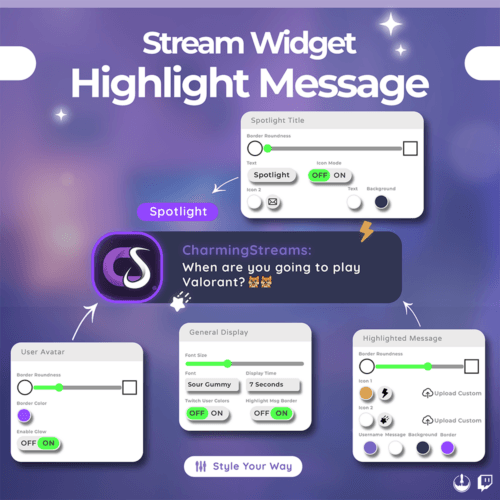
What you actually control. Chat overlays, goals and timers don’t need to live in someone else’s dashboard. Free standalone widgets drop into OBS as a browser source and keep working regardless of who owns what.